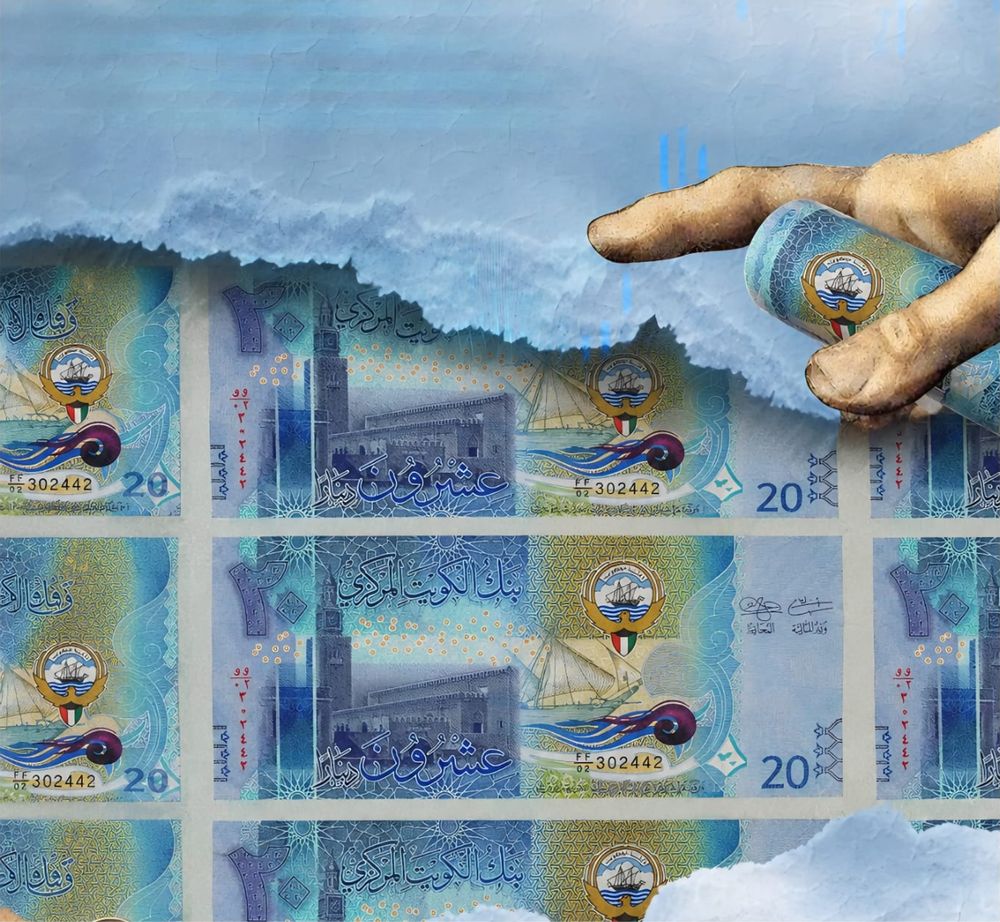
The Debt Economy
How paying monthly became the default in Kuwait. A Kuwait Nation report.
By The Kuwait NationAugust 17, 2026
In Kuwait, cars, phones, laptops, furniture and homes can all be bought on monthly plans offered by banks, showrooms, electronics stores and payment apps. For many people, installments make large purchases possible. They also mean part of each salary is committed before the month begins.

One borrower’s story
For one private-sector worker in his late twenties, it began with a car. “I needed it for work, and I couldn’t afford to pay for a decent car upfront,” he told Kuwait Nation. A phone and a MacBook followed, both on monthly plans. “I convinced myself that paying a little every month was easier than spending a large amount at once.”

He earns about KD 800 a month. Between KD 320 and KD 360 of it now goes on repayments. He asked not to be named.
He says the offers are everywhere. “Whether you’re in a car showroom or buying something online, there’s always the option to pay monthly. You don’t really add it all up.” The strain showed one month when car expenses and family commitments hit at the same time. “The salary came in and most of it was already gone.” He has come close to missing a payment, and says saving has become hard.

What a month can look like
Illustrative example. Figures are hypothetical. A government employee earns KD 1,000 a month. They pay KD 220 for a car, KD 30 for a phone, KD 90 for furniture and KD 50 on a personal loan.
Total: KD 390 a month, 39% of salary, just under the central bank’s 40% limit. KD 610 remains for rent, food, fuel, school fees and everything else.
The numbers
Households owed banks KD 20.03bn in December 2025, the highest level on record, according to Central Bank of Kuwait figures. Most of it is housing finance (KD 17.28bn). Consumer loans make up KD 2.75bn.

In 2018, the last time the CBK published a detailed breakdown, Kuwait had 739,450 borrowers. Nine in ten Kuwaiti borrowers were under 50.
The rules
Under CBK rules, total monthly repayments cannot exceed 40% of net salary, or 30% for retirees. Housing loans can be repaid over up to 15 years, consumer loans over up to five.

The CBK has repeatedly said most borrowers keep up. In one statement, it put the share of Kuwaiti borrowers repaying on schedule at 97.5%.
When payments stop
If unpaid debts go to court, the debtor can be banned from travelling or have their car taken. Since March 2025, people who can pay but refuse can also be detained.

In the first half of 2024, the Ministry of Justice issued 43,290 travel bans and seized 42,885 vehicles over unpaid debts. Debt-related travel bans rose 31.7% from a year earlier. These figures cover all unpaid debts, including rent, phone bills and family court payments, not installments alone.
A national effort
During Ramadan 2026, 138,328 donors gave KD 16.54m to a Ministry of Justice campaign to clear the debts of struggling citizens. By the latest update, 2,422 cases had been approved and KD 7.51m paid out.

This story is not a judgement on installments. For many people, Qist is what makes a car for work, a family home or a needed laptop possible, and most borrowers in Kuwait repay without trouble. It is an observation of how deeply monthly payments now shape everyday life, and what happens when they become too much. The figure worth knowing before any purchase is the total cost, not just the monthly one.